


Olive oil museums in Italy — a journey through green gold
08-07-2025
Olive oil museums in Italy: discovering green gold across the country
Some people spend their holidays chasing the sea. Others hunt for picture-perfect hilltop villages. Some head straight for the trattorias showcasing their hand-scribbled menus. And then there are people like us — the ones who follow the scent of extra virgin olive oil in every corner of Italy.
Because olive oil can be tasted, produced, and bought — but it can also be visited! Italy's olive oil museums are open doors into the culture of green gold: surprising, multi-sensory, and perfect for anyone who wants to experience a blend of community, flavor, and history.
In this article, I'll take you on a journey from Matera to Lake Garda, exploring four unique museums (some underground and centuries old, others high-tech and interactive) that tell the story of olive oil in ways you may never have seen — or tasted.
MOOM - Museo dell'Olio di Oliva - Matera (Basilicata)
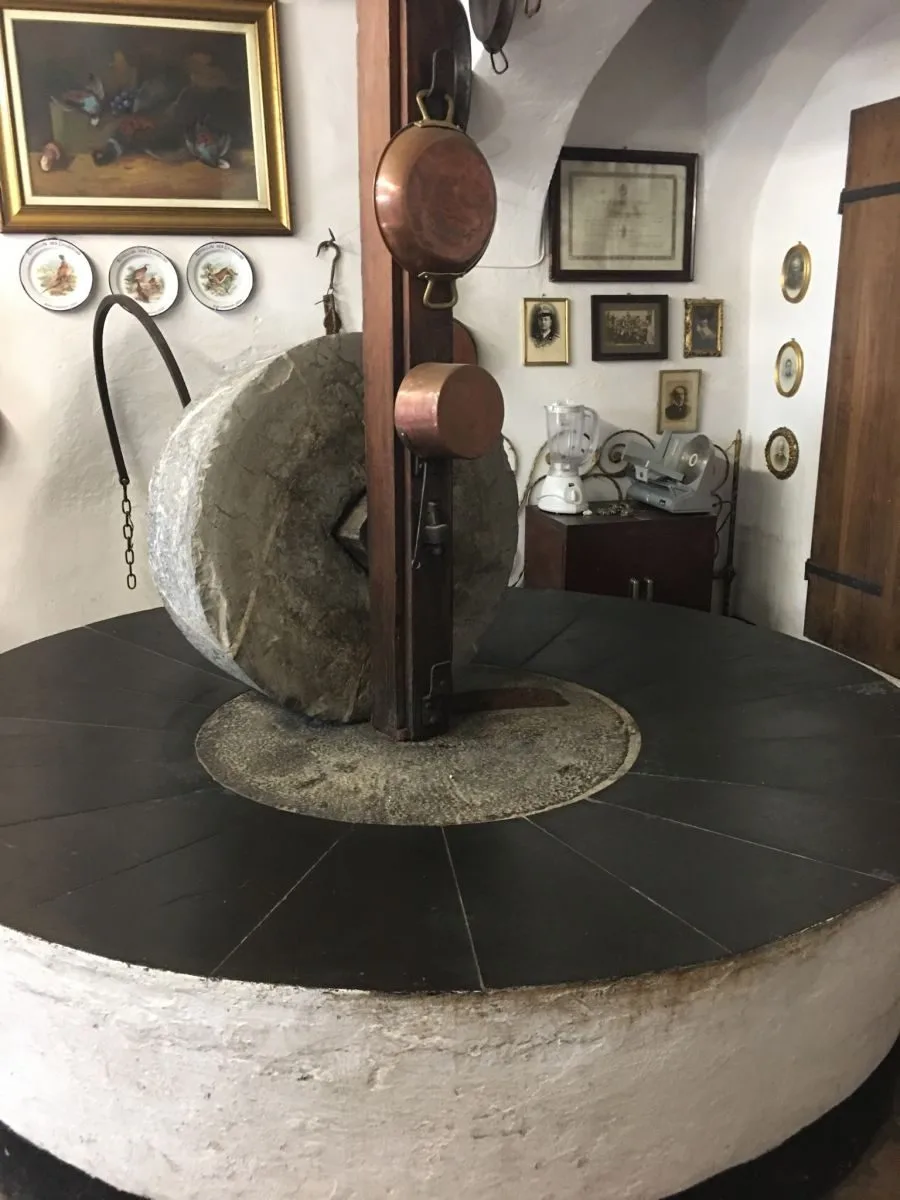
We'll start from the ground up. Quite literally. The MOOM is an underground olive oil museum carved into the ancient rock of Matera's Sassi, housed in a 15th–16th century cave-press mill seamlessly integrated into the city's landscape. Here, you don't just look at exhibits — you walk among ancient presses, millstones, and oil lamps, enveloped by the scent of stone and time, as if stepping into a historical novel.
- It's one of the most stunning historic olive mills open to visitors in Italy
- It sits on Via Casalnuovo, one of the few streets in the Sassi accessible by car, easy to reach and surrounded by artisan shops, postcard-worthy views, and restaurants serving authentic Lucanian cuisine
- It hosts tastings of Lucanian extra virgin olive oil in the upstairs room
Frantoio Ipogeo di Palazzo Granafei - Gallipoli (Puglia)
We're still underground but moving to Gallipoli, in the Salento region. Beneath the noble palaces of Granafei and D'Acugna lies a perfectly restored 17th-century underground olive press. Today, it's managed by the Gallipoli Nostra association, which brought it back to life and opened it to the public in 1988. A true journey through time, where archaeology meets authentic olive oil heritage tourism.
- It's the only one of Gallipoli's 35 underground olive mills to be fully restored and open to visitors
- 200 square meters of rooms carved into Lecce stone
- Original grindstones, presses, and even stables for the animals that once powered the machinery
- Tells the fascinating story of “lamp oil,” once exported to light the streets of cities like London and Amsterdam, when olive oil was mainly used as fuel or to make soap
Museo dell'Olio di Seggiano - Grosseto (Tuscany)
We're now about to change scenery completely. This hilltop village at the foot of Monte Amiata is home to the olivastra seggianese, a native olive variety. Here, the olive oil experience is quite unique and spread out. The Seggiano olive oil museum isn't a classic museum but a journey through historic mills, the 15th-century frescoes of the Oratory of San Rocco, and tasting squares scattered around town.
The highlight is a medieval water reservoir that has been converted into an artistic and scientific installation featuring a suspended olive tree — rescued from a landslide! — nourished through aeroponic technology. Soon, sensors will be installed to monitor its electrical activity, turning its signals into visual traces via a scriptorium machine, a sort of poetic translator between the plant and humans. Science fiction? No, Tuscany. This project is in collaboration with the International Laboratory of Plant Neurobiology at the Faculty of Agriculture, University of Florence.
Olive Oil Museum del Garda - Bardolino (Veneto)
We end our journey on the shores of Lake Garda, at Italy's very first olive oil museum, opened in 1988 by the Turri family. Originally based on a private collection, it has grown into a landmark for Italian and international olive oil tourism, welcoming over 50,000 visitors every year.
- Over 450 original pieces, including 18th-century presses, water-powered mills, and rare wooden tools
- Multimedia displays, educational videos, and immersive experiences
- A working olive mill and a shop with local products, plus natural cosmetics and soaps made with EVOO
A perfect example of integrated olive oil tourism — a place to discover, taste, shop, and leave with a story worth sharing.
Why visit olive oil museums in Italy?
Because an olive oil museum is more than culture — it's tasting, storytelling, and discovery. It's also the perfect excuse to explore lesser-known regions, discover local olive varieties, breathe in the scent of thousand-year-old trees, and bring home a souvenir that won't gather dust: a bottle of artisanal extra virgin olive oil.
Olive oil tourism in Italy is a journey that never really ends. Keep following me and get ready for new olive oil tourism adventures — they might include tasty bruschetta!